
Project tracking
Use project time tracking to improve your estimates
Compare estimated and recorded project time, separate scope changes from delivery work, and turn task history into more informed future estimates.
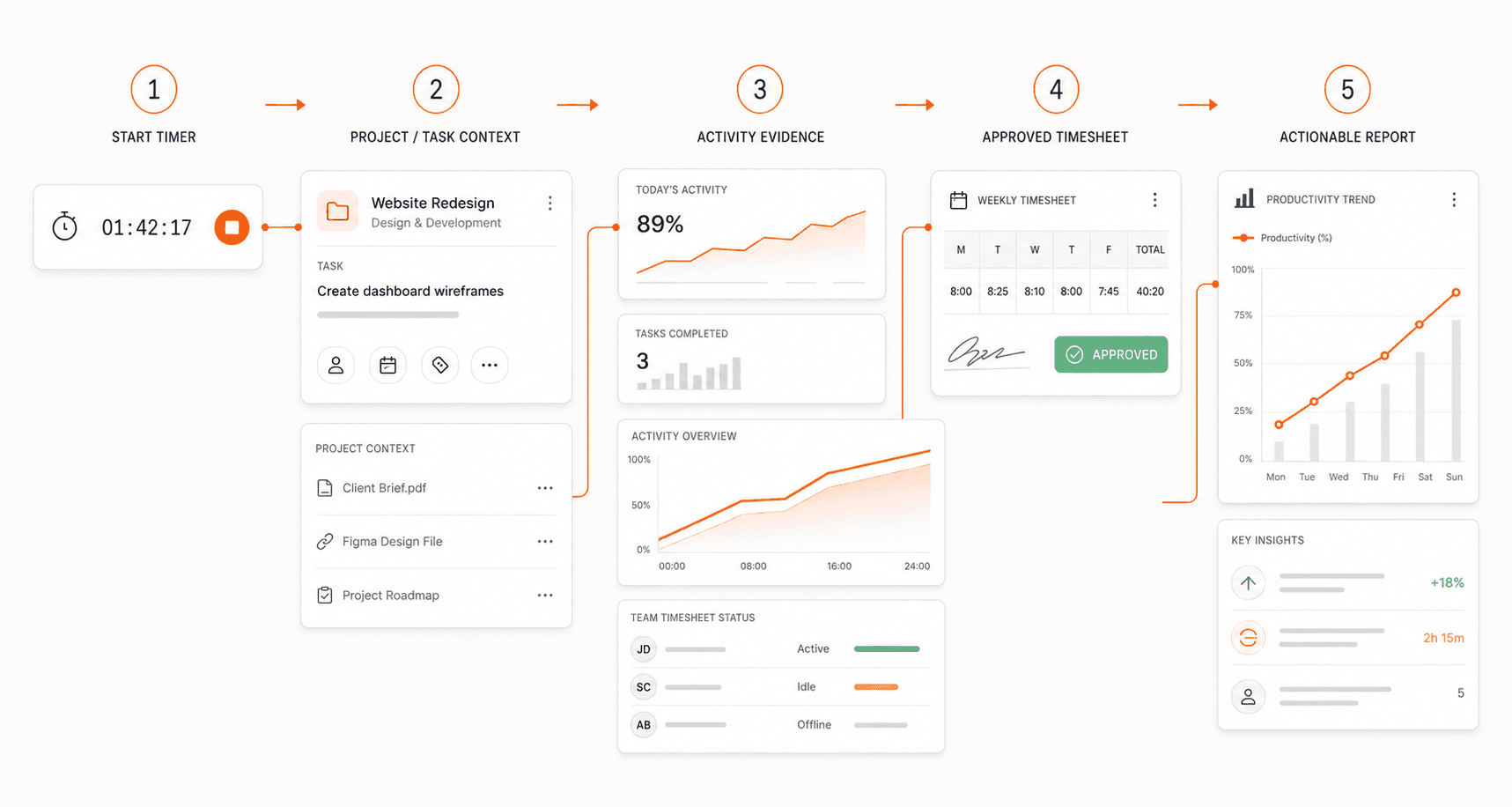
Track work at a useful level of detail
Project totals show where time went, but task-level records help explain why. Choose task names that reflect recognizable pieces of work, such as research, implementation, review, or revisions. Keep the structure consistent enough to compare similar projects later.
Avoid breaking every small action into a separate tracking category. That can make recording time harder without improving the estimate. Start with the stages where a difference in duration would change your staffing, schedule, or scope decision.
Write down the assumptions behind an estimate
An estimate is easier to learn from when its assumptions are visible. Record what is included, which inputs are expected, and how many review rounds you have allowed for. A number without those assumptions is difficult to compare with the completed work.
For example, a proposal might assume that client copy is ready and that one person can approve the design. If the copy changes or several reviewers become involved, the original estimate no longer describes the same job. Preserve that distinction when reviewing recorded time.
Separate scope changes from the original task
When new work arrives, give it a clear task or note so it can be identified in the review. Otherwise, an expanded assignment can look like an overrun on the original scope. Ask the project owner to clarify whether a request is a revision, a correction, or a new deliverable.
Suppose an example project allows four hours for a landing page layout. Adding a second page changes the assignment. Tracking that addition separately helps the next estimate reflect the original work and the extra request rather than averaging them together without explanation.
Compare completed work before changing your baseline
Use reviewed records from comparable tasks. Check differences in complexity, experience, dependencies, and review requirements. One unusual assignment is a useful case to investigate, but it is a weak basis for rewriting every future estimate.
Discuss where the time went with the people who did the work. If review repeatedly takes longer than implementation, the next action might be a clearer approval process. If research is consistently underestimated, allow more time for it instead of hiding it inside another task.
Bring the learning into the next project
ClareSight's project and task tracking can connect recorded time to the work being delivered. Available project, budget, and reporting features depend on your plan. Use that history alongside project notes and delivery outcomes when planning the next assignment.
Finish with an updated assumption, not just an updated number. Explain why you expect a task to take longer or why an earlier dependency needs resolving. That makes the estimate easier to discuss with the team and more useful when the scope changes again.
Explore the workflow
See how ClareSight works, review the available features, or get the app.
← All articles